BROWSE POWERBOATING ARTICLES
Blue notepad and pencil for jotting down powerboating tips and safety notes. Perfect for enthusiasts and beginners.

Reversing into a Slip

We'll first start it outside the marina and next to a buoy. Use the buoy as a reference and your imagination, for now, to create the docking scenarios below.
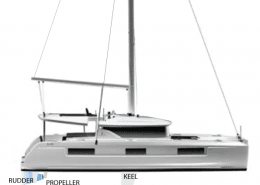
Side view of a sailboat diagram highlighting the rudder, propeller, and keel components for boating enthusiasts.

Cat Play

Here is a fun animation to play with that will test your knowledge but also allow you to start to dial this into your brain muscle memory.
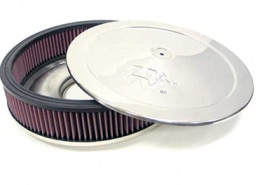
High-performance round air filter with chrome top, ideal for enhancing engine efficiency in powerboats.

Engine Compartment Fire

Fire in the engine compartment is a real risk. The risk is heightened with gasoline fuel (petrol) because of the flammable nature of the vapors.
NauticEd logo. Perfect for online boating education and certifications.

Propeller Entanglement

If there is a sudden slowing or stopping of the engine while motoring it is possible that you have picked up some floating line, hopefully not from your vessel.
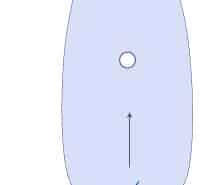
Diagram showing top view of a powerboat with directional arrows indicating the propulsion and movement path.

Stern Forces on a Powerboat

The rudder used with inboard drives or turning the pivot drives with outboards and stern drives can be a big help because it can change the direction of the thrust force at the stern of the boat.
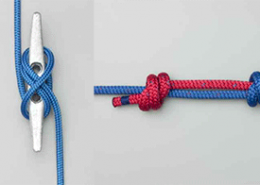
Red and blue boating ropes tied in various essential knots, perfect for secure docking and sailing efficiency.

Let’s Get Knotty

You have to admit that both sailors and truck drivers are probably the best in the world at tying knots.
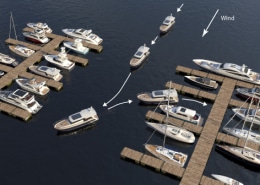
Powerboats maneuvering in a marina with docks, guided by wind direction and arrows, illustrating effective docking techniques.

Maneuvering Mastery

A story (for a reason) from Grant Headifen, Global Director of Education and author of this Maneuvering Under Power Course.
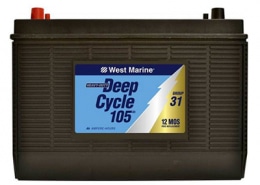
West Marine Deep Cycle 105 battery, Group 31, 12-month warranty. Ideal for reliable powerboating energy needs.

Boat Batteries

The source of DC power is usually one or more marine-grade batteries, normally 12 volts each. They are similar to automobile batteries, except sturdier—and of course more expensive.
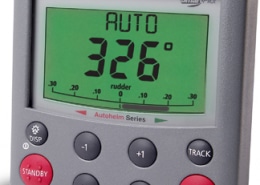
Raymarine autopilot display showing 326 degrees, essential for precise navigation in powerboating.

Moving Your Stern

Fighter pilots are familiar with the term VIF-ing. VIF stands for "vectoring in flight." It means that you can move your plane sideways, up, or down while in flight.
Sailboat anchor diagram shows wind effect lifting anchor shank off seabed, preventing flukes from digging in.

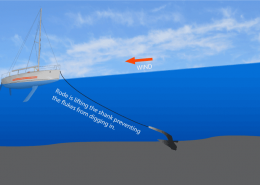
Rode and Scope

To hold a sailboat, the anchor must naturally be attached to the vessel. This is accomplished by using “rode,” which is either all chain or a combination of rope (nylon line) and chain.
Blog Posts
Pages
Categories
Monthly